Overview
College affordability isn’t just about tuition—it’s about the hidden costs that add up fast. Textbooks, lab manuals, and course materials often cost students hundreds of dollars per semester, creating financial stress and even deterring enrollment. At the University of Cincinnati Clermont College, faculty and librarians are turning the tide with a bold, practical solution: open education resources (OER).
This fall, as part of Open Education Week, UC Clermont is spotlighting its commitment to accessible, low-cost learning. The initiative is more than a slogan—it’s a movement driven by librarians, faculty, and students working together to remove financial barriers to education.
What Are Open Education Resources?
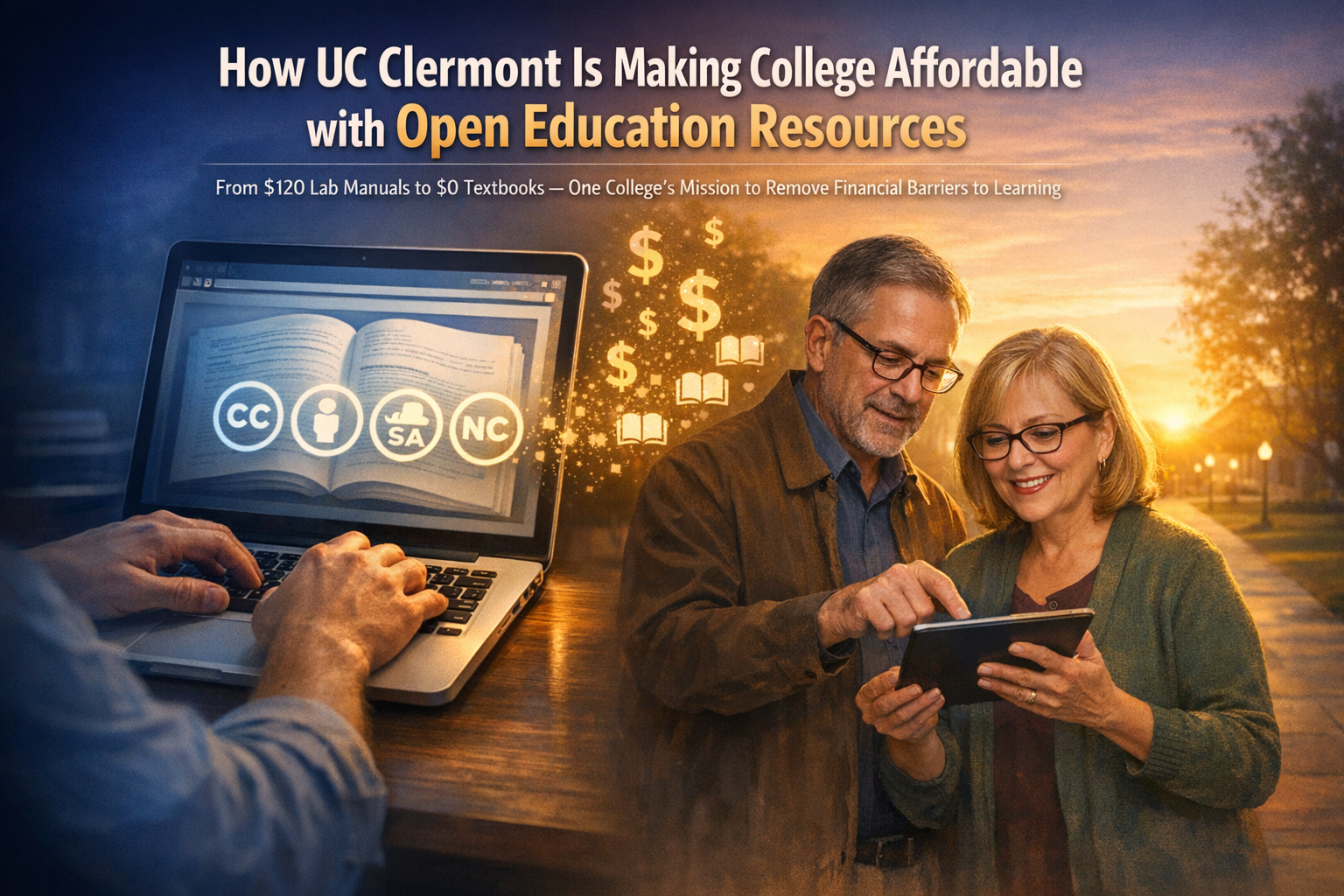
Open education resources are freely available, high-quality learning materials—like textbooks, videos, and assignments—licensed under Creative Commons. This means they can be used, adapted, and shared without copyright restrictions. Unlike traditional textbooks, OER are digital, up-to-date, and often customizable to fit specific course needs.
At UC Clermont, faculty are increasingly choosing OER to replace expensive commercial materials. For example, one biology lab course that enrolls 100–150 students annually saved thousands of dollars per year by switching from a $120 lab manual to an open-access version. That’s not just a win for students—it’s a win for equity and inclusion.
The Faculty-Librarian Partnership Driving Change
The success of OER at UC Clermont isn’t accidental. It’s the result of a strong collaboration between faculty and the Frederick A. Marcotte Library. Librarians like Kathy Ladell are on the front lines, helping instructors find, adapt, and implement open materials.
One of the most effective tools in this effort is the Alternative Textbook Incentive Program (ATIP). This program provides faculty with a $500 stipend and a course release to redesign a course using open textbooks. Each year, a small cohort is selected, and a third cohort has recently been announced.
Beyond ATIP, UC Clermont faculty also participate in statewide affordability initiatives like OhioLINK, which offers grants to instructors who complete training in affordable course design. Two faculty members from UC Clermont have already received these grants, demonstrating the institution’s commitment to sustainable change.
Real-World Impact: From Cost Savings to Better Learning
The benefits of OER go beyond just saving money. At UC Clermont, faculty are using OER to improve teaching and student outcomes. One standout example is Seth Powless, an assistant professor and program coordinator in Supply Chain Management Technology.
Powless has used the ATIP program twice to redesign his fully online courses. He replaced traditional textbooks with academic articles, industry reports, and current online resources. Students now select readings that match their interests and demonstrate learning through written, audio, or video assignments.
“The supply chain world changes so fast,” Powless explains. “Textbooks are outdated almost immediately. By using current articles, students engage more deeply, and they’re learning about real-world challenges—not case studies from 20 years ago.”
The results? Improved student engagement, higher grades, and zero textbook costs. It’s a win-win for both learners and educators.
A Broader Approach to Affordability
UC Clermont isn’t limiting itself to full OER. Faculty are also using a range of affordability strategies, including:
- Reusing textbooks across semesters
- Assigning e-books and online articles
- Placing physical books on course reserve
- Using open-access journals and educational videos
During Open Education Week, the library will feature “affordability advocates”—faculty who have successfully reduced course material costs to under $40 per student.
Why This Matters
For many students, the cost of college isn’t just about tuition—it’s about the hidden expenses that make it harder to stay enrolled. By making course materials free or low-cost, UC Clermont is helping students focus on learning instead of financial stress.
“It’s expensive for students to go to college, and there’s little we can do about tuition or fees,” says Kathy Ladell. “This is a small way we can help—especially for students who choose Clermont because of the cost.”
The university’s mission is clear: accessible education in all forms. And with OER, they’re proving that affordability and quality can go hand in hand.
Final Thoughts
Open education resources aren’t just a trend—they’re a transformation. At UC Clermont, they’re helping students save money, stay engaged, and succeed. As more institutions adopt OER, the dream of affordable, equitable education becomes more attainable.
If you’re an educator, administrator, or student, consider how OER could make a difference in your learning environment. The future of education isn’t just about what you teach—it’s about who you can reach.
Share:
Game-Based Learning 2026: How Play Is Reshaping Education, Health, and Career Readiness