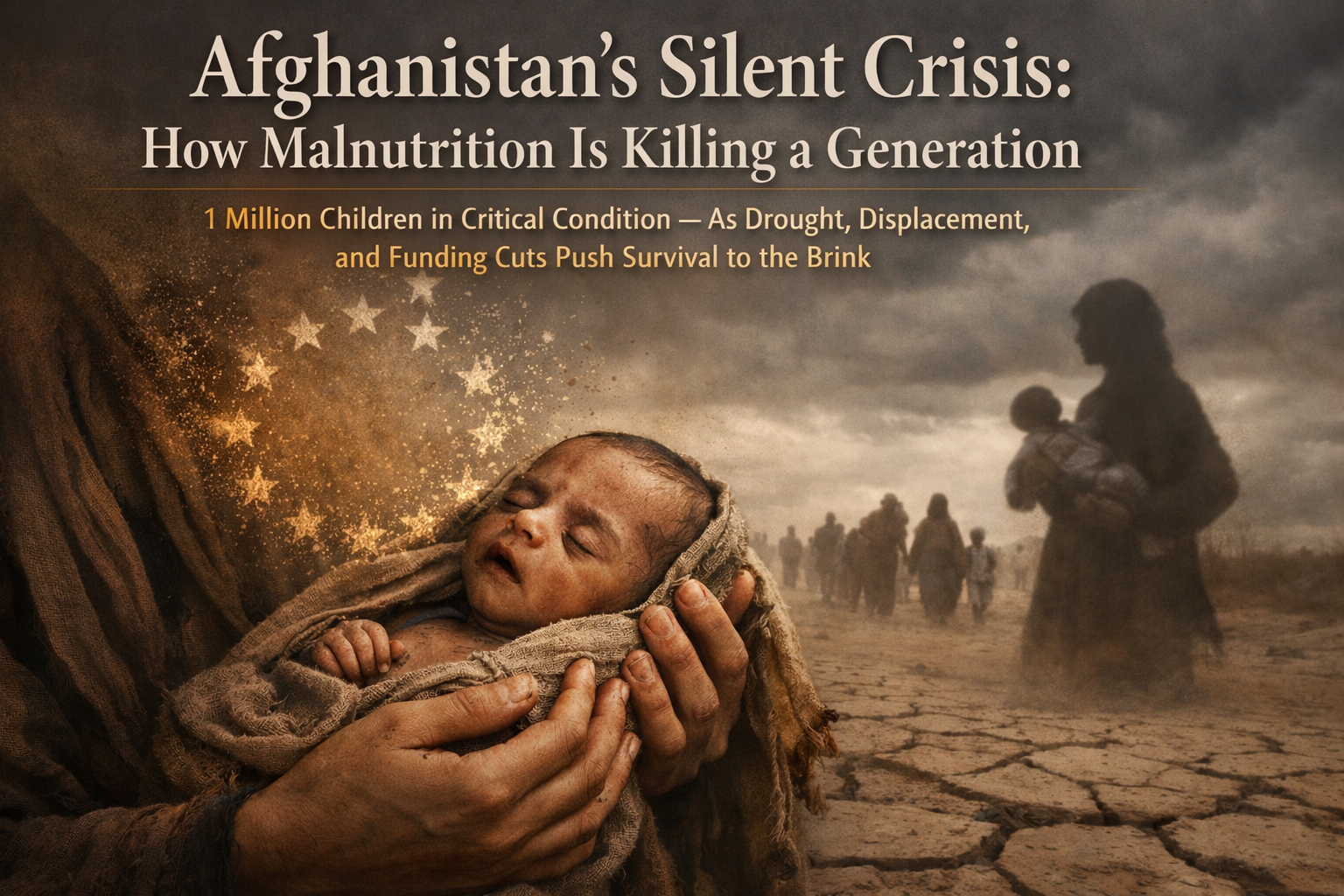
A Hidden Emergency: Malnutrition in Afghanistan Is Getting Worse
In a small, carpeted room in Helmand province, a midwife demonstrates how to hold an infant for breastfeeding — using a doll to show the proper position. Around her, 10 mothers sit against cushions, each cradling a small child.
These children are not just sick — they’re fighting for their lives.
They’re being treated at a therapeutic feeding unit run by Action Against Hunger, with support from the European Union. Many suffer from severe acute malnutrition — a life-threatening condition that weakens the immune system, stunts growth, and can lead to death if untreated.
And the numbers are staggering:
- 4 million children in Afghanistan are malnourished
- 1 million are severely malnourished and need medical treatment
- 17 million people face acute food insecurity — 3 million more than last year
This is not a crisis of the past. It’s unfolding right now — and it’s getting worse.
The Perfect Storm: Why Malnutrition Is So Prevalent
Afghanistan’s humanitarian crisis didn’t happen overnight. It’s the result of a deadly combination of:
- Prolonged drought that has destroyed crops and livelihoods
- Economic collapse and extremely high unemployment
- Recent earthquakes that left thousands homeless
- Forced deportations from Pakistan and Iran — over 2.8 million Afghans returned last year, with nearly as many expected in 2026
Many of those returning arrive with nothing — no shelter, no food, no support. They’re dumped into communities already struggling to survive, straining already limited resources.
And the situation is only getting worse. The United Nations World Food Programme (WFP) reports that current needs far exceed available funding — especially after recent cuts from major donors like the U.S.
The Human Cost: Mothers, Children, and a Broken System
In the therapeutic feeding units, health staff work around the clock to treat children with severe malnutrition. They use specialised therapeutic nutritional products, provide continuous medical care, and offer free meals and nutrition counselling to mothers — many of whom are malnourished themselves.
But the system is overwhelmed.
“We provide good care here,” says a midwife and nutrition expert at the feeding unit. “But we don’t have enough space for all children who need treatment. When we’re at maximum capacity, we have to turn families away.”
This is not just a health crisis — it’s a systemic failure. Families are being forced to choose between food and medicine, between survival and dignity.
And the children? They’re paying the highest price.
Aid Is a Lifeline — But It’s Not Enough
Despite the scale of the crisis, humanitarian organisations are still able to provide critical support — thanks to funding from partners like the European Union.
They’re keeping:
- Health facilities open
- Therapeutic feeding units running
- Trained health staff — including female health workers — on the ground
But even with this support, the need far outpaces the resources. And without sustained funding, more children will die.
The Bottom Line: We Can’t Stand By
This is not just a story about hunger. It’s about humanity — about the dignity of children, the resilience of mothers, and the courage of health workers.
But it’s also about accountability.
If we want to prevent a generation from being lost to malnutrition, we need:
- Sustained funding for humanitarian aid
- Global attention on Afghanistan’s crisis
- Policies that protect vulnerable populations, not just in times of war — but in times of peace
The world has a choice: turn a blind eye — or act before it’s too late.
Because in Afghanistan, every day without treatment means another child dies. And no child should have to.
Share:
Eylea™ 8mg Just Got Approved in the UK and Korea — What It Means for Patients and Biosimilars